


List of mooncake brands in market:
> Tai Thong
> Six Happiness
> Hei Yuet Thong
> Baker's Cottage
> Oversea
> Kam Lun Tai
> Foh San
> Yong Sheng
> Tong Kee
> Yu Ai
> San Shu Gong/ Prestige Green Point
> Season
> Lotus Vegetarian
> Purple Cane
Previous weekend, I went to Giant Hypermarket Senawang for grocery items. And Six Happiness has already set up their mooncake booth for the upcoming festival.


Six Happiness available flavours.


New flavours for 2010

Price list for mooncake
A slice of the moon (The Malaysian Insider)
By Eu Hooi Khaw
The Ng Yan or assorted nuts mooncake... it's healthy and yummy.
KUALA LUMPUR, July 24 — The small slice of durian mooncake in ping pei just explodes in the mouth with the heavenly aroma and flavour of mau san wong, the king of durians. The ping pei avocado with custard is so creamy and smooth, buttery with a hint of pandan flavour.
I had just tasted the two best mooncakes at Shangri-La Kuala Lumpur: the first one has been a top favourite with hundreds of people since it was first made many years ago. Only the best durian suffices for this mooncake, and you have to eat it within three days of you taking it home, not that this is any problem.
The ping pei avocado is one of four new varieties to be added this year, thanks to Shangri-La’s new dimsum chef Low Kien Fatt. Now there are 14 altogether, eight baked ones and six ping pei.
The other three new ones include green tea with candied ginger, white chocolate with kumquat and dark chocolate with almond and hazelnut. The green tea one was a little too sweet but I loved the bits of ginger in it.
White lotus paste with egg yolk. Chef Low is a master of his craft.
The chef would have reduced the sweetness by now as he promised. There’s a citrusy lift to the white chocolate one that I liked, and the dark chocolate with a slight bitter edge and the crunch of nuts tastes good too.
As for the classic mooncakes, Shang has the best Ng Yan or mixed nuts one I have ever eaten. No wonder it sells so well. On the day I was there, someone had just ordered 50 boxes! There are more than 10 ingredients in the mooncake: sweet melon, sesame, almonds, kut paeng (candied mandarin orange peel), melon seeds, walnuts, hazelnuts, syrup and rose wine. I like this chewy, nutty and sticky mooncake which fills you up. Think of it as a great, healthy snack.
Most of the baked mooncakes have a very thin skin, just 18g of it per mooncake, all the better for you to enjoy the filling. This is especially true for the white lotus and golden lotus paste. The tau sar (red bean paste) and the Ng Yan have a thicker skin – 25g.
That’s because the Ng Yan has a lot of filling to hold together. And you can’t risk the dark filling showing through the skin for the red bean one. A melon seed called lam yan, which is more fragrant, is used for this mooncake, together with white melon seeds.
Green tea and bird's nest mooncakes... unusual takes on the classic.
Oh yes, the salted egg yolk. “It has to be sung far (light and disintegrate in your mouth),” says chef Low. The sale of mooncakes started on July 1, and since then he has been kept busy making 400 mooncakes a day.
There is another special mooncake that’s so delicate, yet luxurious in taste – the bird’s nest one with custard in ping pei.
The level of sugar in the mooncakes has been reduced in keeping with health trends.
Every year the Shangri-La Kuala Lumpur seems to outdo itself in the design of the mooncake boxes. This year’s is a silk-clad, cushiony one in gold and brown.
You can call to order at 03-2074 3560. You will receive two rebate vouchers valued at RM20 each to be used at Shang Palace and Zipangu for every mooncake gift box purchased.
The Mid-Autumn or Mooncake Festival is on September 22.


Other related mooncake posts:
> Baker's Cottage mooncake
> Casahana charcoal mooncake
> Burst of flavours
> Sweet autumn delights
Meanwhile, Baker's Cottage released their new flavours for 2010.
Pricey mooncakes expected due to rise in cost of materials (The Star)
By Lee Yen Mun
Thursday, August 5
PETALING JAYA: Mooncake lovers will be dismayed to find that they will need to pay more for the sweet delicacy this coming Mid-Autumn Festival.
Manufacturers have increased the retail price of mooncakes due to the rise of the cost of raw materials, particularly lotus seed, a crucial ingredient for producing the paste filling of the cake.
One manufacturer said the price of imported lotus seeds had doubled since early this year, from RM11.50 to RM24 per kilo.
P.K. Shum, general manager of Biskut Foh San Sdn Bhd, said the price of other ingredients had gone up as well, including beans, which are used to make mooncakes.

Costly delicacy: An employee of Overseas Restaurant Lisa Lam (left) introducing the different types of mooncake to customer Cass Leong at Jalan Imbi yesterday.
“While the rising cost is reflected in the retail price, consumers should also know that our company has absorbed part of the increase,” he said, adding that consumers should expect to pay between RM1.50 to RM1.75 more for each cake.
Generally, a regular fist-sized cake with only lotus paste filing may cost between RM11-RM12 each while a gourmet variant, such as one with nuts and meat, may cost up to RM15 per piece.
A sales representative for KLT Food Industries Sdn Bhd (Kam Lun Tai), who identified himself as Soo, said the price hike was a chain effect from the rise in all raw ingredients in general.
Asked whether the Government’s subsidy cut for sugar and flour would affect prices, Soo said the margin was not significant enough to affect the overall price.
“What has impacted the price most is the lotus seeds,” he said.
MCA Consumer Affairs Bureau chief Lee Wei Kiat said that it had not received any complaints from customers about the price hike so far.
The Mid-Autumn Festival will fall on Sept 22.
By Lee Yen Mun
Thursday, August 5
PETALING JAYA: Mooncake lovers will be dismayed to find that they will need to pay more for the sweet delicacy this coming Mid-Autumn Festival.
Manufacturers have increased the retail price of mooncakes due to the rise of the cost of raw materials, particularly lotus seed, a crucial ingredient for producing the paste filling of the cake.
One manufacturer said the price of imported lotus seeds had doubled since early this year, from RM11.50 to RM24 per kilo.
P.K. Shum, general manager of Biskut Foh San Sdn Bhd, said the price of other ingredients had gone up as well, including beans, which are used to make mooncakes.

Costly delicacy: An employee of Overseas Restaurant Lisa Lam (left) introducing the different types of mooncake to customer Cass Leong at Jalan Imbi yesterday.
Costly delicacy: An employee of Overseas Restaurant Lisa Lam (left) introducing the different types of mooncake to customer Cass Leong at Jalan Imbi yesterday.
“While the rising cost is reflected in the retail price, consumers should also know that our company has absorbed part of the increase,” he said, adding that consumers should expect to pay between RM1.50 to RM1.75 more for each cake.
Generally, a regular fist-sized cake with only lotus paste filing may cost between RM11-RM12 each while a gourmet variant, such as one with nuts and meat, may cost up to RM15 per piece.
A sales representative for KLT Food Industries Sdn Bhd (Kam Lun Tai), who identified himself as Soo, said the price hike was a chain effect from the rise in all raw ingredients in general.
Asked whether the Government’s subsidy cut for sugar and flour would affect prices, Soo said the margin was not significant enough to affect the overall price.
“What has impacted the price most is the lotus seeds,” he said.
MCA Consumer Affairs Bureau chief Lee Wei Kiat said that it had not received any complaints from customers about the price hike so far.
The Mid-Autumn Festival will fall on Sept 22.
Dumplings are readily available throughout the year nowadays, but indulging in these glutinous rice delicacy is meaningful during this time of the year.
The fifth day of the fifth lunar month, which falls on June 16, is the day the Chinese celebrate the Duanwu Festival, also known as Dragon Boat Festival or Dumpling Festival.
It commemorates the patriotism of Qu Yuan, a Chinese poet and statesman who was accused of treason and banished.

Today, rice dumplings, or zongzi, come in a range of varieties — sweet, savoury, spicy, cylindrical and rectangular - and there is even a trend to include exquisite ingredients into the otherwise humble food.
The Hakka version of the sticky rice parcels, brimming with green beans and black-eyed peas among other ingredients, were selling like hot cakes.
The Taiwanese ones, on the other hand, contained peanuts and salted dried radish.
Another version of the Duanwu Festival touches on avoiding diseases.
As the weather turns warm in the fifth lunar month, insects multiply and spread diseases. So the people hang calamus and Chinese mugwort (both are aromatic plants) to ward off insects and also evil spirits.
Variations
Jia zong (假粽): Instead of glutinous rice, mochi-like balls of glutinous rice flour (so no individual grains of rice are discernible) are used to "contain" the filling of the zong. These zong are typically smaller than most zongzi and much stickier.

Jianshui zong (碱水粽): Meaning "alkaline water zong", these are typically eaten as a dessert rather than as a main meal. The glutinous rice is treated with lye water (aqueous sodium carbonate), giving them their distinctive yellow color. Jianshui zong typically contain either no filling or are filled with a sweet mixture (e.g. sweet bean paste). They are often eaten with sugar or light syrup.
Nyonya zong (娘惹粽): A specialty of Peranakan cuisine. These zong are made in similar style with similar fillings as Southern zong. However the wrapping used is pandan leaves.

The fifth day of the fifth lunar month, which falls on June 16, is the day the Chinese celebrate the Duanwu Festival, also known as Dragon Boat Festival or Dumpling Festival.
It commemorates the patriotism of Qu Yuan, a Chinese poet and statesman who was accused of treason and banished.

The Hakka version of the sticky rice parcels, brimming with green beans and black-eyed peas among other ingredients, were selling like hot cakes.
The Taiwanese ones, on the other hand, contained peanuts and salted dried radish.
Another version of the Duanwu Festival touches on avoiding diseases.
As the weather turns warm in the fifth lunar month, insects multiply and spread diseases. So the people hang calamus and Chinese mugwort (both are aromatic plants) to ward off insects and also evil spirits.
Variations
Jia zong (假粽): Instead of glutinous rice, mochi-like balls of glutinous rice flour (so no individual grains of rice are discernible) are used to "contain" the filling of the zong. These zong are typically smaller than most zongzi and much stickier.

Jianshui zong (碱水粽): Meaning "alkaline water zong", these are typically eaten as a dessert rather than as a main meal. The glutinous rice is treated with lye water (aqueous sodium carbonate), giving them their distinctive yellow color. Jianshui zong typically contain either no filling or are filled with a sweet mixture (e.g. sweet bean paste). They are often eaten with sugar or light syrup.
Nyonya zong (娘惹粽): A specialty of Peranakan cuisine. These zong are made in similar style with similar fillings as Southern zong. However the wrapping used is pandan leaves.

Dearer but smaller dumplings (The Star)
By Yee Xiang Yun, Tuesday June 15
JOHOR BARU: An increase in pork prices has led to smaller rice dumplings for this year’s Duan Wu festival tomorrow.
Some traders and consumers have even resorted to substituting pork, the preferred meat among the Chinese and one of the traditional and crucial ingredients for the dumpling, with chicken.
A morning market trader, who only wished to be known as Chen, 55, said she was forced to reduce the size of her rice dumplings due to the high price of pork.
“The price has risen tremendously compared to last year and I am forced to make smaller dumplings for sale.
“Last year, 1kg of pork only cost RM9 but now, I have to pay RM13 per kg for pig trotters,” she said, adding that she sold her dumplings in Taman Johor Jaya for RM3 each.
Hot and steamy sale: Freshly steamed glutinous rice dumplings selling like hot cakes at the Ho Yoke Kee store, which has been in business in Petaling Street, Kuala Lumpur, for at least five decades. The shop is run by Jenny Ho, 40, (left), whose late grandfather started the business.
“Last year, my dumplings cost RM2.50 each and the size was bigger. Some customers have complained but most are of them are understanding about the current situation,” she said.
The annual event, also known locally as the Dragon Boat Festival, commemorates the life and death of the famous Chinese scholar Qu Yuan who drowned himself after being banished by his king over 2,000 years ago.
Housewife Chia Hwa Fong, 53, said she preferred to make her own rice dumplings, as this way she could put in whatever ingredients she liked.
“My family also prefers the dumplings I make compared with the ones sold outside as these are smaller in size and contain little pork.
“The price of pork has definitely affected the price of dumplings, causing them to be dearer but smaller in size,” she said, adding that she would usually add shrimps and dried oysters along with other traditional ingredients such as pork, mushrooms and salted egg yolk in her dumplings.
Factory worker Ngoi Chew Foong, 47, said she used chicken instead of pork for her rice dumplings.
“Chicken is cheaper and easier to prepare. Many of my neighbours were complaining about the high pork prices, which made me think of using chicken instead,” she said.
However, Ngoi said although the price of pork was high, many people still continued using it as the main ingredient because of its more authentic taste.

Green Tea & Red Bean Series

1. Red Bean
2. Green Tea (Green Tea Butter Pastry Skin)
3. Green Tea Red Bean(Green Tea Butter Pastry Skin)
3. Green Tea Red Bean(Green Tea Butter Pastry Skin)
Pandan Lotus Series

1. Pandan Lotus
2. Pearl of Prosperity
3. Pandan Pumpkin
4. Pandan Lotus 1 Yolk
All Time Favorites

1. XO Supreme Mixed Nuts
2. Mixed Nuts
3. Tiramisu (Cantonese Coffee Pastry Skin)
4. Pearl of Harmony
2008 Best Sellers

1. No Sugar Added White Lotus
2. Toffee Chocolate Walnut Brownie
3. Low Sugar Yam Gingko
4. Green Tea Berries
Pure Lotus & White Lotus Series

1. Shanghai Pure Lotus 1 Yolk
2. Pure Lotus 2 Yolk
3. Pure Lotus 1 Yolk
3. Pure Lotus 1 Yolk
4. Pure Lotus
5. Low Sugar White Lotus 1 Yolk
6. Low Sugar White Lotus

First In Town 2009

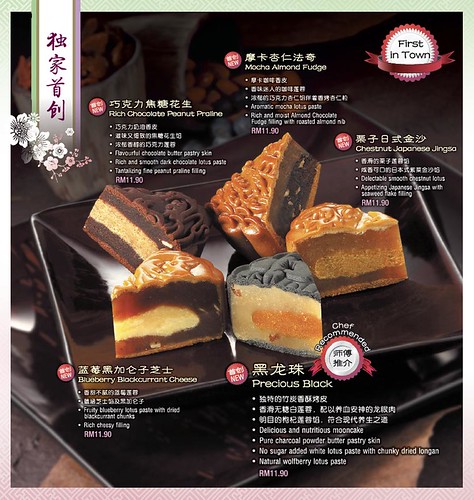
Precious Black which features charcoal powder butter pastry skin with wolfberries are all sold out. Their mooncake is selling like hot cakes, why don't give a try of other brands (Casahana). Price of a piece maybe costly but major hypermarkets are slashing their price for last week.
Arguably I'm in good mood when post about mooncake over here, but now left in despair. I will be in line with everyone for the best and quality post.
This weekend most of Chinese will celebrate the Mooncake festival. My previous of Burst of flavours already mentioned mostly about Tai Thong mooncakes. Kindly be reminded, their quality have deteriorated over time, so make a smart choice this year.
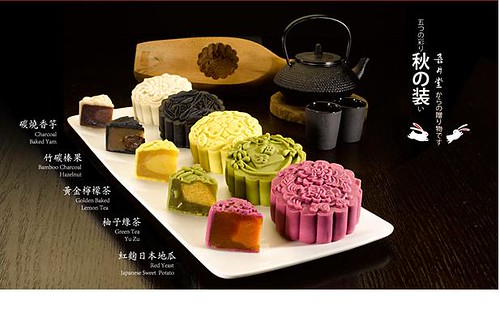
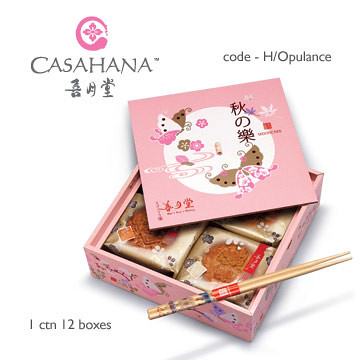
As a result of the drop in quality, I recommend all of you out there to try Casahana or Hei Yue Thong and The Baker's Cottage mooncake.
From my analysis, this two brands are topmost in market. The reasons are simple; it is tasty and fresh.
Casahana
Their new flavours include:
Charcoal Baked Yam
Charcoal Baked Yam is mixture of black skin with red bean paste and egg yolk made of yam. The taste is rich but I prefer yam filling in the core. Rating: 4.5 out 5
Bamboo charcoal hazelnut
Bamboo Charcoal Hazelnut has chocolate egg yolk with hazelnut blend as main filling. The skin is typically black as made of charcoal paste. It may has some bitter taste. Rating: 4.8 out 5
Golden baked lemon tea
Golden Baked Lemon Tea is one of my favourite this year. Strong smell and perfect combination; the filling is lotus seed and blend of lemon and ice tea in the middle. It will suit well with a glass of ice lemon tea. Rating: 4.8 out 5
Green Tea Yu Zhu
I didn't get to taste it
Red Yeast Japanese Sweet Potato
Red Yeast Japanese Sweet Potato is most natural flavour mooncake of all. The skin is made of yam purplish in colour and yam filling. You can taste the natural ingredients used in it. Rating: 4.5 out 5
Each flavour has their unique temptations. In overall, creativity and taste is A+ and health element is a priority.
Note: Baker's Cottage will follow up in the next post.
As a result of the drop in quality, I recommend all of you out there to try Casahana or Hei Yue Thong and The Baker's Cottage mooncake.
From my analysis, this two brands are topmost in market. The reasons are simple; it is tasty and fresh.
Casahana
Their new flavours include:
Charcoal Baked Yam
Charcoal Baked Yam is mixture of black skin with red bean paste and egg yolk made of yam. The taste is rich but I prefer yam filling in the core. Rating: 4.5 out 5
Bamboo charcoal hazelnut
Bamboo Charcoal Hazelnut has chocolate egg yolk with hazelnut blend as main filling. The skin is typically black as made of charcoal paste. It may has some bitter taste. Rating: 4.8 out 5
Golden baked lemon tea
Golden Baked Lemon Tea is one of my favourite this year. Strong smell and perfect combination; the filling is lotus seed and blend of lemon and ice tea in the middle. It will suit well with a glass of ice lemon tea. Rating: 4.8 out 5
Green Tea Yu Zhu
I didn't get to taste it
Red Yeast Japanese Sweet Potato
Red Yeast Japanese Sweet Potato is most natural flavour mooncake of all. The skin is made of yam purplish in colour and yam filling. You can taste the natural ingredients used in it. Rating: 4.5 out 5
Each flavour has their unique temptations. In overall, creativity and taste is A+ and health element is a priority.
Note: Baker's Cottage will follow up in the next post.
 |
| Jade Delights with Coconut Silk |
The following promotions only apply on Tai Thong.
APPLE-flavoured, lemon-flavoured, tiramisu, cream cheese: Believe it or not, these are different flavours of mooncakes.
And they are back! Wherever you turn in supermarkets and shopping complexes over the next few weeks, you will not miss the areas set aside especially to display mooncakes.
And the varieties available are mind-boggling.
 |
| Snow Skin Chocolate Mint with Nut Pieces |
So, what’s the best way to consume mooncakes?
It is a dessert, and as such it goes best with Chinese tea, but it can also be had with sugar-free coffee and tea.
“When eating mooncakes, take it with a sugarless beverage as it is already a very sweet confection. To enjoy the flavours, the drink must be tepid or bland.”


THE Chinese Mid-Autumn Festival is not only a time for moon gazing and romantic lantern walks. It is also a time to indulge in the decadent sweetness of the mooncake.
Only available between July and September, these fat, round pastries are filled to the brim with dense delicious fillings. Such is their richness that diners are only able to consume small wedges of these cakes at one time.
When the Chinese immigrated to Malaya in droves during the mid-18th century, they brought this sweet sticky delight along.
Mouth-watering varieties: From the traditional to the novel, there are now so many types of mooncakes
Of the other varieties of mooncakes, there is the Teochew version which is recognisable by its outer yam covering and pork filling. This uncommon mooncake is delicious when eaten hot off the wok.
More popular is the northern Chinese style with fillings of pine nuts, almonds and pork ham and is also known locally as the “wedding biscuit”, although it will take on a flatter shape on such an occasion.
There is also the Shanghai mooncake with a hard biscuit-like covering and a lotus paste and yolk filling.
Lum Tuck Loy, 64, chairman of Selangor Restaurant Keeper’s Association, has studied the mooncake industry during the early post-Merdeka years. The father of six who started making mooncakes at the age of 16 at Yuk Woo Hin, a Chinese restaurant at Petaling Street, recalled that there were only two main types of fillings in the market during the 1960s – lotus paste and red bean.
Popular: The northern China version of the mooncake is very similar to the ‘wedding biscuit’
Touching on the ping peh mooncake (snowy covering made of rice flour and sugar paste which does not require baking), there is a general misconception that it emerged only during the 1980s.
According to Lum, it was already present as far back as the 1960s.
“The ping peh was rather rare in the beginning as it was only made after the bakers had finished with their batch of baked mooncakes for the season. I remember that we only made it one or two days before the festival day and it was only distributed among the workers and close friends,” he says.
In contrast to the array of shapes, flavours and colours of today, the original ping peh only came in white and was filled with lotus, green bean or red bean paste.
However, its sudden proliferation in the market during the 1980s may be linked to the advancement of retail-style refrigeration units which made it possible for vendors to stock the ping peh.
But more endearing than the ping peh are the sweet chewy dough figurines in cute animal shapes. For the Chinese, no childhood memory will be complete without these sweet treats from their elders.
Made from the very same dough used for mooncake pastry, these edible animals were made after the bakers found that they had leftover dough. These were quickly transformed into piglets, lions or fishes to make the children happy.
Cute: Animal figures from leftover dough


